DIAMOND EDUCATION
Moissanite Education
A complete guide to understanding moissanite and comparing its appearance, durability, price and characteristics.
DIAMOND EDUCATION
A complete guide to understanding moissanite and comparing its appearance, durability, price and characteristics.

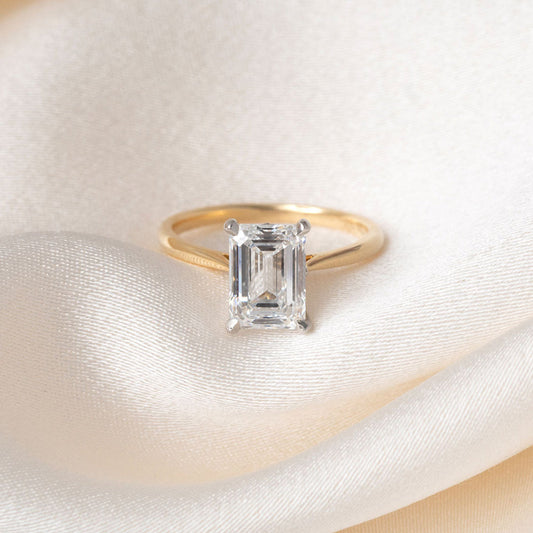
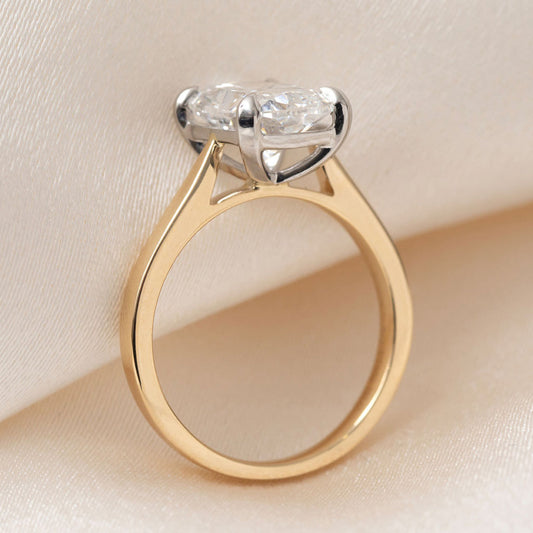
Moissanite is a naturally occurring mineral made of silicon carbide. It was first discovered by Henri Moissan in 1893 in meteorite fragments. Natural moissanite is extremely rare, and the moissanite used in jewelry today is lab-created, offering the same remarkable beauty and durability that has made it a popular choice for modern jewelry.
No, moissanite is not a diamond. A diamond is made of carbon, while moissanite is made of silicon carbide. They look similar, but moissanite has more colorful, rainbow-like fire. On the Mohs hardness scale, a diamond is 10, while moissanite is 9.25, which is still exceptionally durable for everyday wear.

| Characteristic | Moissanite | Natural Diamond | Lab-Grown Diamond |
|---|---|---|---|
| Durability | 9.25 Mohs | 10 Mohs | 10 Mohs |
| Brilliance | More fire (stronger rainbow sparkle) | Bright, classic sparkle | Bright, classic sparkle |
| Color | Typically near colorless (Premium & Super Premium) | Range from colorless to light color | Typically colorless to near colorless |
| Price | Generally lower priced | Generally higher priced | More affordable than natural diamond |
| Sourcing | Lab-created | Forms naturally in the earth | Lab-created |
Swipe to compare all options

It can be difficult to tell moissanite from a diamond with the unaided eye, as both are beautiful and highly brilliant. A trained professional can confirm the difference using gemological examination and specialized testing.


Consider the cut, color and clarity when choosing a moissanite. Moissanite is commonly offered in Premium and Super Premium color categories, with Super Premium giving a more colorless look. Also think about what matters most to you — fire, scintillation, price and durability — to decide if moissanite is the right choice for your jewelry.